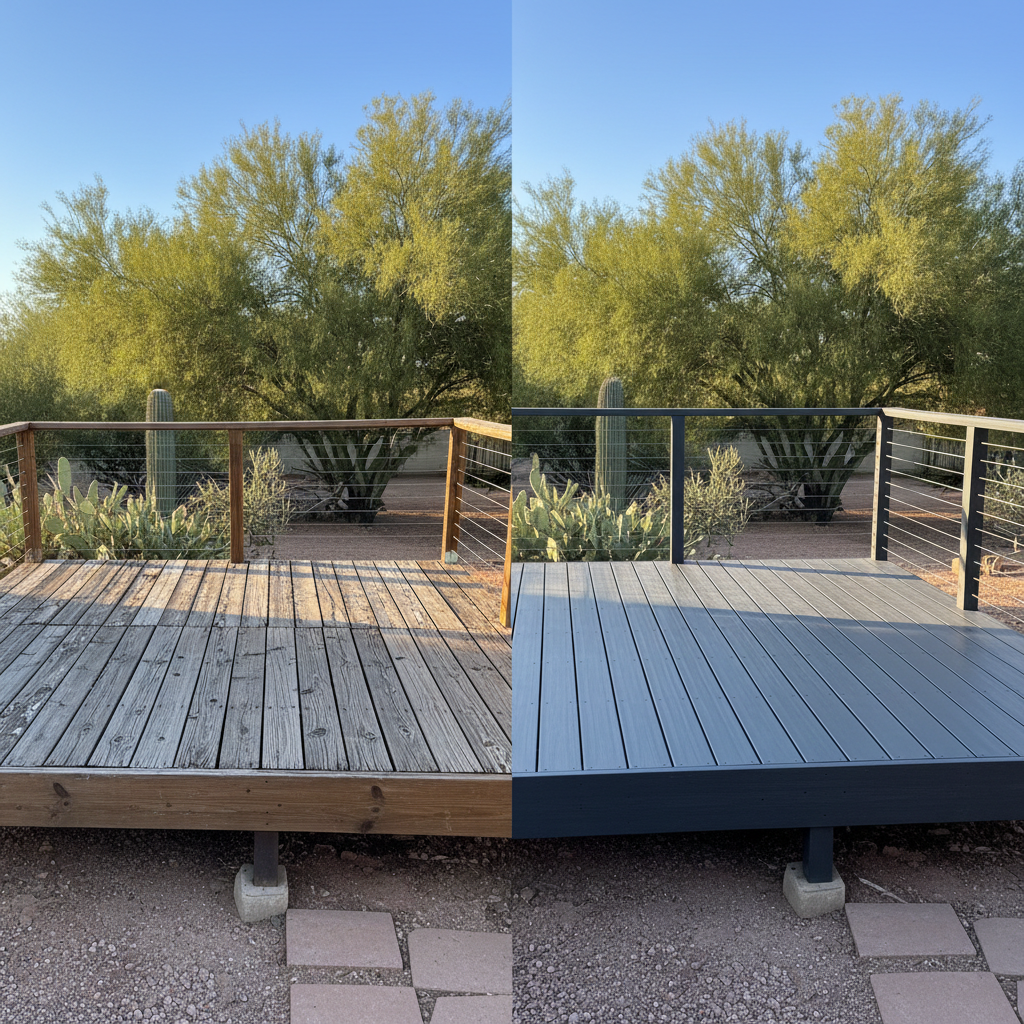
So, you're looking at a metal deck for your place here in Phoenix. Smart move, especially with our sun and heat. Metal decks are tough, they last, and they look sharp. But when it comes to how they're actually built, you've mainly got two ways to go: welded or bolted. And trust me, there's a big difference.
Welded Metal Decks: The Strong, Seamless Look
When we talk about a welded metal deck, we're talking about a structure where the steel or aluminum components are literally fused together using high heat. Think of it like a permanent, super-strong bond. I've built plenty of these, and when done right, they're incredibly robust.
Pros of Welded Decks:
- Unmatched Strength: A properly welded joint is often stronger than the base metal itself. You're not relying on fasteners that can loosen over time. This is a huge plus for a heavy-duty structure like a deck, especially if you're planning on putting a lot of weight on it or dealing with any kind of wind uplift we sometimes get here in the Valley.
- Clean Aesthetics: Because the joints are fused and then often ground smooth, you get a really clean, seamless look. No visible bolts, nuts, or connection plates. It's a sleek, modern finish that a lot of homeowners love, especially on contemporary homes in areas like Arcadia or Paradise Valley.
- Corrosion Resistance (Done Right): When the entire structure is welded and then properly coated – whether that's powder coating or galvanizing – you get excellent protection against corrosion. There are no gaps or crevices for moisture to sneak into and start rusting from the inside out, which is a real concern with our monsoon humidity.
- Less Maintenance: With no bolts to check or tighten, your long-term maintenance is pretty minimal beyond routine cleaning and occasional recoating if the finish ever gets damaged.
Cons of Welded Decks:
- Higher Upfront Cost: Welding is a specialized skill, and it takes more time and specific equipment. That translates to a higher labor cost.
- Less Flexibility: Once it's welded, it's welded. Making changes or disassembling it later is a major undertaking.
- On-Site Quality Control: The quality of the weld depends entirely on the skill of the welder. You need a contractor who knows what they're doing, like us at Done Right Decks of Phoenix, to ensure those welds are sound.
Bolted Metal Decks: Practicality and Adaptability
Bolted metal decks, on the other hand, use mechanical fasteners – bolts, nuts, and sometimes screws – to connect the various components. This is a very common construction method for many things, and decks are no exception.
Pros of Bolted Decks:
- Lower Upfront Cost: Generally, bolted construction is less labor-intensive than welding, which can bring down the initial cost.
- Easier to Modify or Repair: If you ever need to change a section, expand the deck, or replace a damaged component, it's much simpler to unbolt and rebolt than to cut and re-weld.
- Consistent Quality: While proper installation is still key, the strength of a bolted connection is more predictable than a weld, as long as the right fasteners and torque are used.
- Faster Installation: Bolting can often be a quicker process on-site, which means less disruption for you.
Cons of Bolted Decks:
- Potential for Loosening: Over time, especially with temperature fluctuations (and we get plenty of those here in Phoenix!) and vibrations, bolts can loosen. This means you might need to periodically inspect and tighten them.
- Less Seamless Appearance: You'll see the bolts, nuts, and connection plates. While some people don't mind this industrial look, it's not as clean as a welded finish.
- Corrosion Points: Every bolt hole and every connection point is a potential spot for moisture to get in and start corrosion, especially if the protective coating isn't perfectly applied around the fasteners. This is a big deal in our climate where rust can really take hold if not properly addressed.
- Requires More Maintenance: Beyond checking for loose bolts, you also need to ensure those fasteners are properly sealed and protected from the elements.
My Recommendation for Phoenix Homeowners
Look, both methods can give you a strong, durable deck. But when I'm thinking about our specific conditions here in Phoenix – the intense sun, the extreme heat swings, the occasional monsoons, and the desire for something that just lasts without a ton of fuss – I almost always lean towards a welded metal deck.
Why? That seamless, fused construction just holds up better long-term against our harsh environment. You don't have to worry about bolts loosening from thermal expansion and contraction, or about rust starting in a tiny crevice around a fastener. The initial investment might be a bit higher, but the peace of mind and the reduced maintenance over the decades often make it the smarter choice for a permanent structure.
Now, if you're on a tighter budget or you anticipate needing to reconfigure your deck down the line, a well-built bolted system can absolutely work. But you'll want to be diligent about those inspections and maintenance. No matter which way you go, make sure your contractor is using high-quality materials and knows their stuff. This isn't a project you want to cut corners on.
Ready to Talk Decks?
If you're still weighing your options or just want to chat about what makes the most sense for your backyard, give us a call. We're happy to walk you through the specifics and show you examples of both types of construction. We've been building decks all over Phoenix for years, from the older homes in Central Phoenix to the new builds out in Queen Creek, and we know what works here.