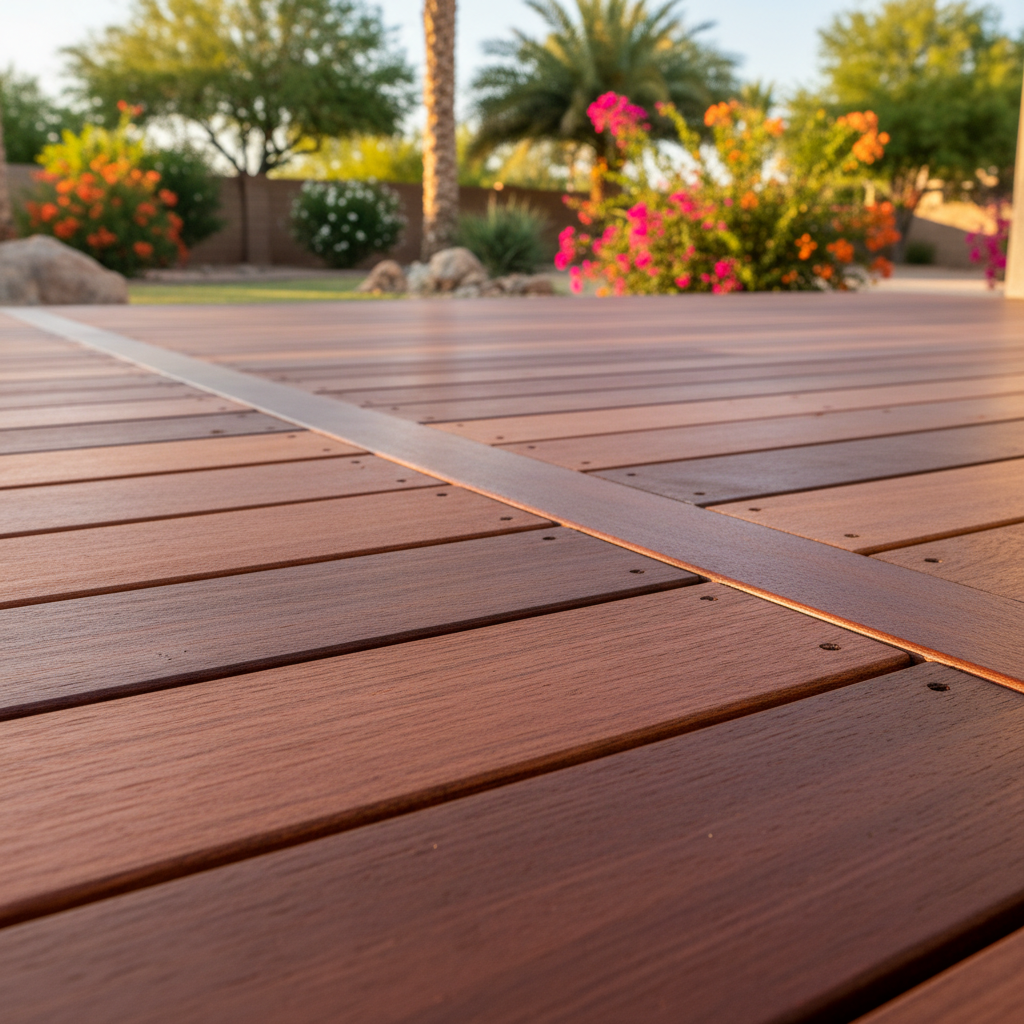
When you walk out onto your backyard deck in Phoenix, AZ in July, the surface can feel extremely hot under your bare feet. That intense Phoenix heat does not just scorch your skin; it bakes the wood of your deck until it dries out, cracks, and fades. Keeping up with a proper coating routine is the only way to stop that damage before it ruins your lumber.
Before You Touch a Brush
You cannot just slap a new coat of stain over last year's dust and expect it to hold. Desert winds love to coat everything in a fine layer of grit, and if you skip the prep work, your finish will peel right off. Grab a stiff broom, clear away the debris, and check the boards for splinters or popped-up screws. You will need to wash the surface thoroughly using a dedicated deck cleaner to strip away oxidized wood fibers. Let it dry completely for a couple of days because trapping moisture under a sealer in our climate is a recipe for disaster.
Tackling the Application
Once the wood is bone dry, it is time for the main event. If you are handling this part yourself, pick a morning when the temperature is not climbing past eighty degrees yet, otherwise your stain will dry too fast and leave lap marks everywhere. Work in small sections, following the grain of the wood, and use a roller or a stain pad to keep the finish even. Done Right Decks of Phoenix sees many homeowners try to rush this stage, but taking your time here makes all the difference in how long your finish survives against harsh UV rays.
DIY vs. Calling in Reinforcements
Staining a small, ground-level patio deck on the weekend is a manageable project for most handy homeowners. You just need patience, a few basic tools, and a weekend where you do not mind getting dirty. But if your structure is two stories high, sits over a complex pool scape, or features severely weathered hardwood that needs heavy sanding, you will save yourself a massive headache by calling in a pro. Safety and precision matter, especially when dealing with tricky architectural angles.
After the Job is Done
Give your newly finished deck at least forty-eight hours to cure fully before dragging heavy patio furniture back across it. Maintenance around the Valley mostly comes down to keeping the dust blown off and doing a quick water droplet test every spring. If water stops beading up and starts soaking straight into the wood, you know it is time to think about a maintenance coat before the next monsoon season rolls through.