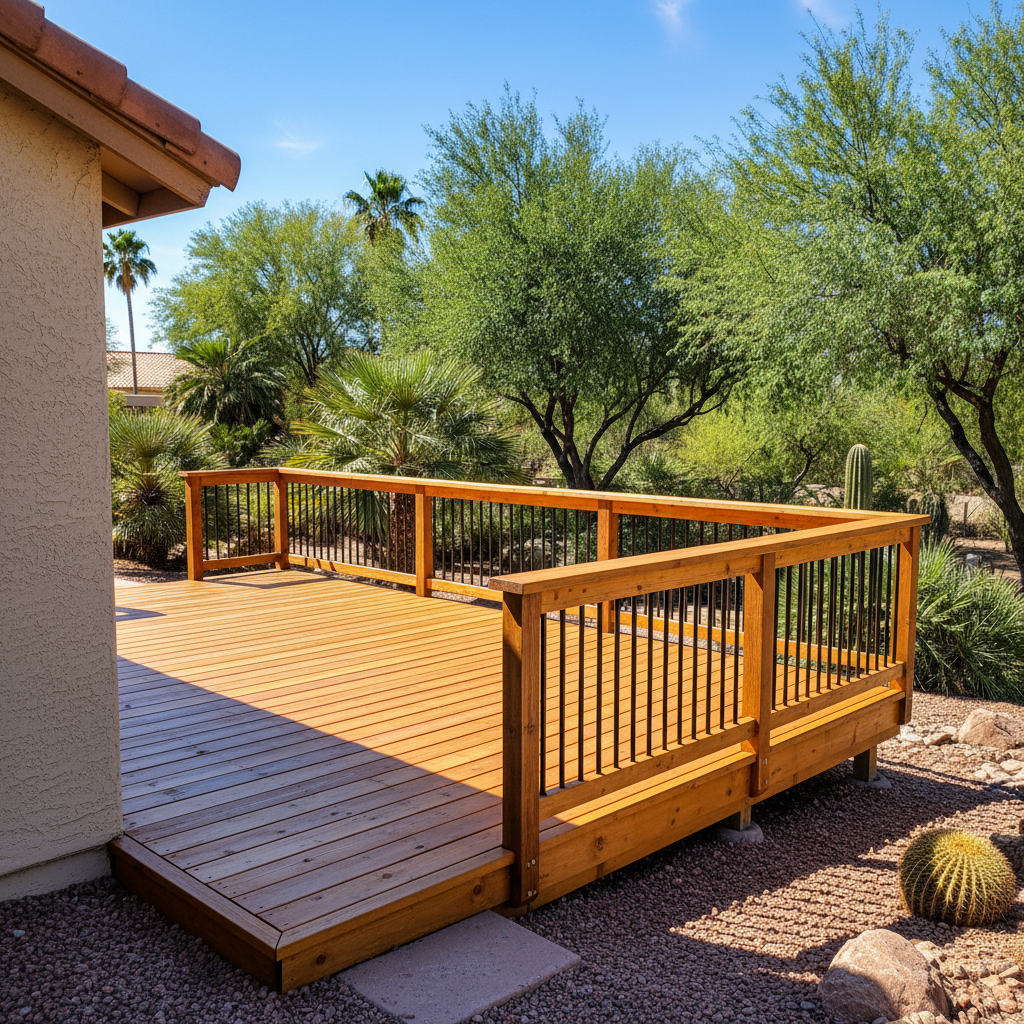
Most homeowners do not think about fixing up their backyard deck until they are ready to host a weekend cookout, and by then, the Phoenix heat is already working against them. If you are living anywhere from Ahwatukee to North Scottsdale, you already know that our local climate is brutally tough on outdoor living spaces. Between the hundred-plus-degree summer swings and the bone-dry winter air, outdoor structures take a serious beating year-round.
Done Right Decks of Phoenix has seen that homeowners usually wait too long to address minor board warping, loose fasteners, or failing posts. They figure a little wobble is not a major issue. But out here in the desert, minor issues turn into major structural failures much faster than they would in a milder climate. The intense UV rays bake the moisture right out of natural lumber, while composite materials expand and contract with extreme thermal shifts.
When to Schedule Your Deck Repairs
Timing is everything when you are working outdoors in the Valley of the Sun. Major carpentry work or surface rehab should not be scheduled in July or August. When ambient temperatures hover around 110 degrees, sealants dry too fast, adhesives fail, and working outside for hours is unsafe for the crew.
Instead, target the sweet spot between late October and early March. During these months, daytime highs sit comfortably in the seventies and low eighties. The weather lets fasteners bite properly, wood treatments cure the right way, and Done Right Decks of Phoenix can actually inspect every joist and ledger board without frying on the metal hardware.
How Phoenix Weather Affects Your Deck
Our soil conditions and weather patterns create unique challenges for decks. Many homes in the East Valley sit on expansive caliche clay or loose desert fill, which shifts slightly as we transition from dry months to monsoon season downpours. If your deck posts are not anchored deep enough, that ground movement translates straight up into your framing.
- Intense UV exposure breaks down surface fibers and fades pigment rapidly.
- Monsoon humidity spikes can cause untreated wood to swell, then crack as the dry air returns.
- Wind-blown dust and caliche grit get trapped in gaps, holding moisture against the boards during rare winter rains.
Protecting Your Investment Year-Round
Homeowners do not need to spend every weekend babying their outdoor space, but a little seasonal awareness goes a long way. Make a habit of walking your deck twice a year—once right before the summer peak hits, and once when the cooler fall weather rolls in. Look for popped screws, splintering handrails, or spongy spots near the ledger board where water might have pooled during a rare storm.
If you stay proactive and tackle repairs during the mild winter window, you will avoid the rush and keep your backyard setup safe for family and friends. A well-built Deck Repair service adds real value to any home in Phoenix.