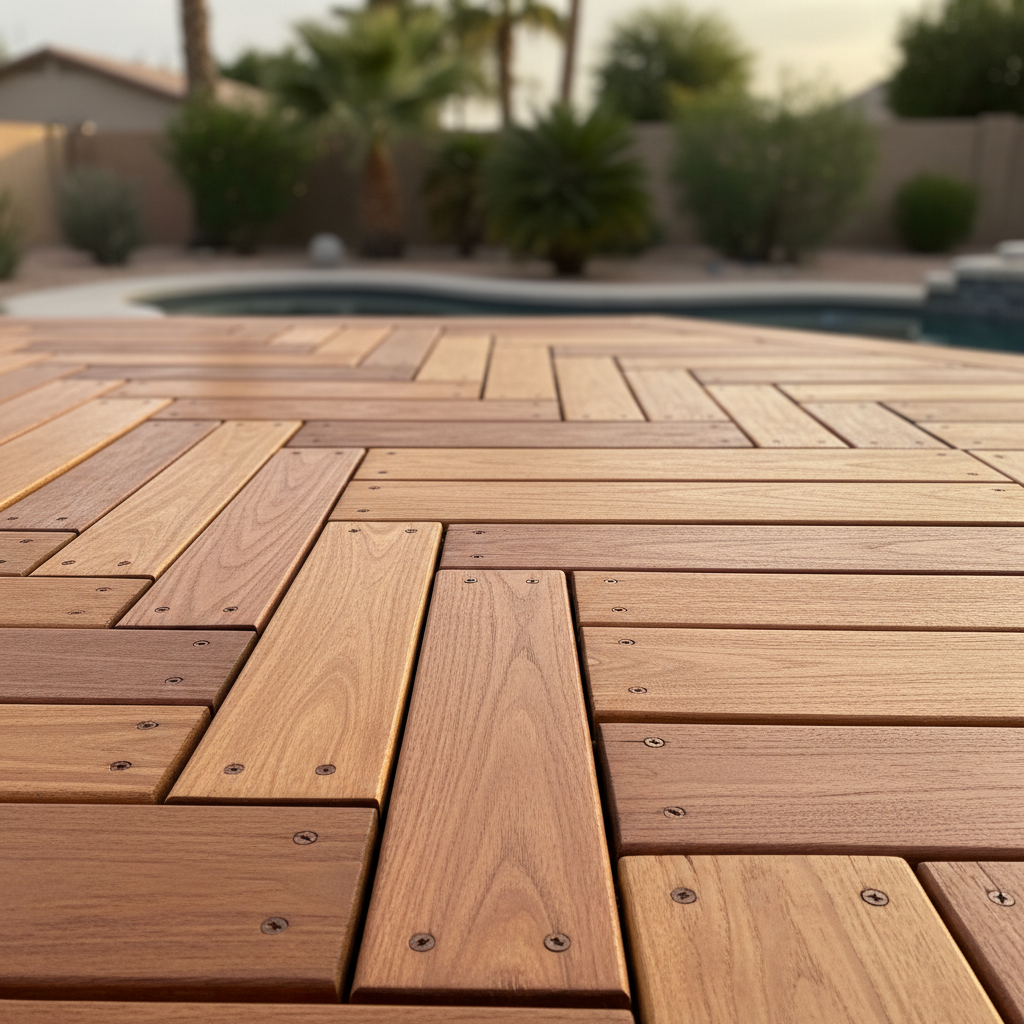
Is your deck looking a little tired? Maybe you've noticed a loose board, a railing that wiggles, or some wood rot starting to show. That happens, especially with the brutal Phoenix sun and those occasional monsoon downpours really beating up outdoor structures. Knowing what you can realistically fix yourself and when it's time to call in a pro can save you a ton of time, money, and frankly, a lot of headaches.
Before You Grab Your Tools: Check Out the Damage
First things first, really scrutinize your deck. Don't just look at the obvious stuff, you know? Walk all around it, peek underneath if you can, and give it a thorough inspection. Here’s what I always tell people to keep an eye out for:
- Loose or Split Decking Boards: These pop up pretty often. The sun bakes the wood, it expands and shrinks, and fasteners can just work their way free. Splitting happens too, especially if the wood wasn't treated or maintained properly.
- Wobbly Railings: This is a major safety concern. If a railing post or baluster moves more than an inch or two when you give it a good push, it needs some attention. Kids, pets, even adults leaning on a weak railing can cause serious accidents.
- Wood Rot: This one's the silent killer of decks. Look for wood that feels soft and spongy, especially where one piece of wood meets another, or where water tends to collect. Spots near the ground, like the bottom of posts, or areas hit by sprinklers are prime candidates. The base of a post, particularly if it's sitting right on the soil in a typical Phoenix backyard, is a common place for rot to begin.
- Corroded Fasteners: Screws and nails can rust, especially if they aren't exterior-grade or if they've been exposed to moisture. Rusted fasteners just lose their grip.
- Structural Issues: This is the big kahuna. Are the support posts leaning? Are the beams sagging? Do you see big cracks in the main support pieces? These aren't just cosmetic problems; they're serious safety hazards.
DIY Deck Repairs: What You Can Probably Handle
For smaller, more straightforward problems, you can absolutely roll up your sleeves and get to work. You might be surprised what a little effort and the right tools can achieve.
- Replacing a few decking boards: If you've got a couple of cracked or rotted deck boards, you can usually cut them out and put new ones in. Just make sure you use the same kind of wood and fasteners, and pre-drill holes to keep new splits from forming.
- Tightening loose fasteners: Sometimes, all a wobbly board needs is a few new deck screws. If the old screw holes are stripped, use slightly bigger screws or move over a bit.
- Minor railing fixes: If a baluster is loose, you can often re-secure it with good exterior screws. If a top rail wiggles but the posts are solid, you might just need to reinforce its connection to those posts.
- Sanding out splinters: A decent orbital sander can smooth out rough spots and prevent painful splinters. Just remember to re-seal or re-stain the area afterward to protect the wood.
Always wear safety glasses and gloves, by the way, and make sure you're using exterior-grade materials. Don't skimp on fasteners; stainless steel or hot-dipped galvanized are your best friends here.
When to Call Done Right Decks of Phoenix: Time for the Pros
Look, I'm all for homeowners tackling projects, but there are definitely times when it's just smarter, safer, and ultimately cheaper to call in a professional. These are the situations where your deck’s structural integrity is compromised or the repair is simply beyond basic carpentry skills.
- Widespread Wood Rot: If you find rot in lots of places, or if it's in crucial structural parts like joists, beams, or posts, you need an expert. Rot spreads fast, and replacing structural elements takes specific know-how and tools to make sure the deck stays safe and meets code.
- Major Structural Damage: Any problems with the main support posts, beams, or the ledger board (that's the board connecting the deck to your house) are absolutely a call-a-pro situation. These parts hold up the entire weight of your deck, and mistakes here can lead to a total collapse.
- Extensive Railing System Failure: If many railing posts are loose or rotted, or if the whole railing system feels shaky, that's not a DIY job. We're talking about safety, and a professional can properly anchor and reinforce the entire system.
- Deck Collapse or Severe Sagging: This one's pretty obvious, right? If your deck has partly collapsed or is clearly sagging, get off it immediately and call a professional. Seriously, do not try to fix this yourself.
- Permit Requirements: For big structural repairs or changes, you might need a permit from the city of Phoenix. A professional contractor like us knows these rules and can help you through the process.
Even if you're handy, sometimes the sheer size of the repair or how complicated the problem is just calls for professional help. We've got the experience, the right tools, and the knowledge of local building codes to get your deck safe and sound again. Don't hesitate to get an assessment; it's always better to be safe than sorry when it comes to your outdoor living space.