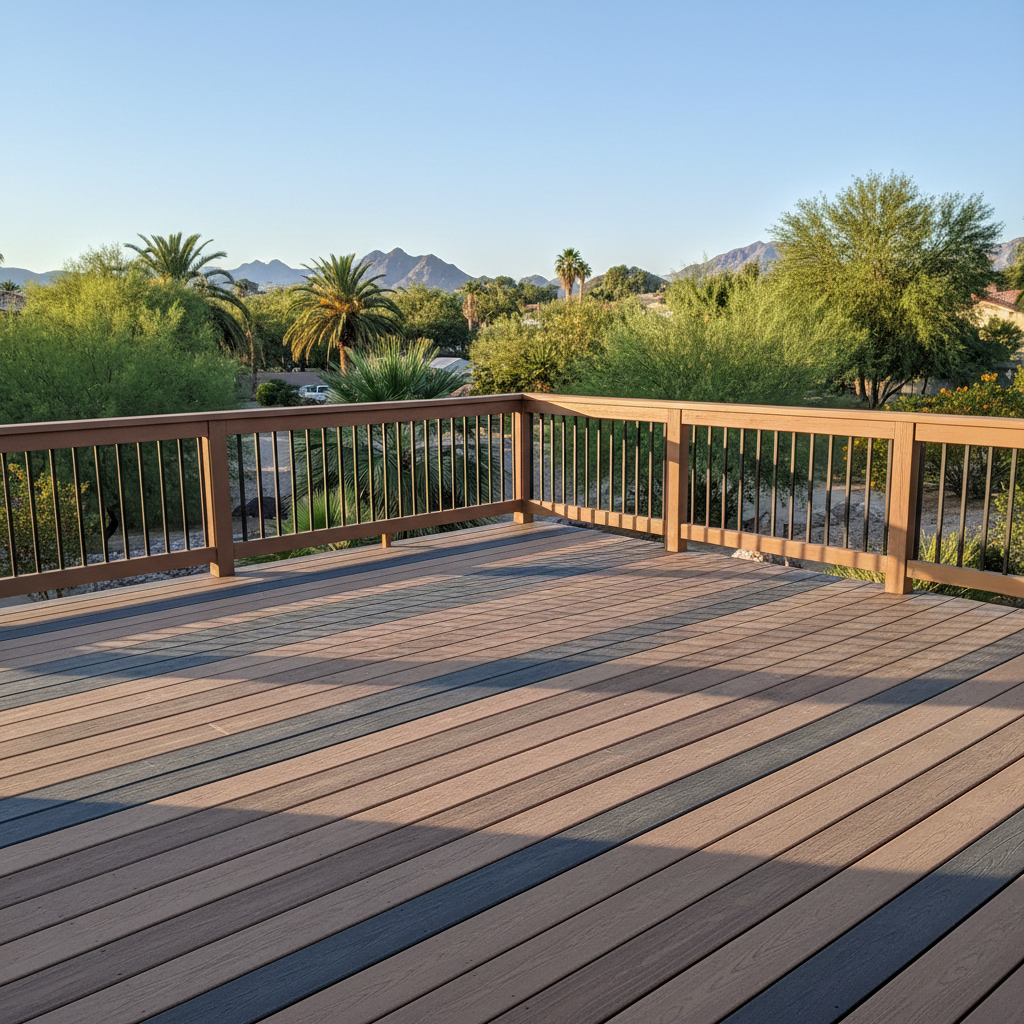
You probably shelled out good money for a composite deck because you heard it was "maintenance-free." Well, let me tell you, that's a bit of a myth, especially here in Phoenix. Sure, you won't be staining or sealing it every year like you would a wood deck. But "maintenance-free" definitely doesn't mean "neglect-free." If you want your investment to last and look good through our brutal summers and dusty winters, you've got to put in a little effort. I've seen too many folks just let their composite decks go, and then they're calling me up, wondering why it looks so faded or stained.
Regular Maintenance: Your Best Defense Against the Desert
The biggest thing you can do for your composite deck? Keep it clean. Seriously, it's that simple. Our Phoenix dust, pollen, and even the occasional monsoon mud can really pile up. If you let that stuff sit, it can lead to mildew, especially in shaded spots or after a good rain. Plus, it just makes your deck look grimy and old. Here's what I tell my clients:
- Sweep it regularly: A good broom once a week, or more often if we've had a dust storm, makes a huge difference. Get rid of leaves, dirt, and anything else that's blown onto the surface.
- Wash it down: Every few months, give it a good wash. You can use a mild soap and water solution — dish soap works fine — and a soft-bristle brush. Rinse thoroughly with a garden hose. Just don't go crazy with a high-pressure washer; too much pressure can actually damage the surface of some composite materials, especially older ones. If you do use one, keep it on a low setting (under 1500 PSI) and hold the nozzle at least a foot away from the deck.
- Watch for stains: If you spill something – BBQ grease, a dropped popsicle, or even a drink – clean it up right away. The longer it sits, the harder it is to remove, right? Most composite manufacturers have specific cleaning recommendations for different types of stains, so it's a good idea to check your deck's brand guidelines.
- Clear debris from between boards: Our fine desert dust can pack into those gaps, holding moisture and creating a perfect spot for mildew to grow. A thin putty knife or a stiff brush can help clear those out.
Extending Your Deck's Life in Phoenix's Harsh Climate
Our sun is no joke. UV rays are a composite deck's biggest enemy, even for products designed to resist fading. While you can't stop the sun, you can lessen its effects. Think about adding shade structures like pergolas or shade sails over your deck. This not only makes your deck more comfortable to use, but it also protects the material from constant sun exposure, which helps prevent fading and keeps the surface cooler. I've seen decks in Sun City West that are fully exposed to the afternoon sun show way more wear and tear than those with some overhead protection, even if they're the same age and brand.
Another thing is proper drainage. We don't get a ton of rain, but when it does come down, it's often fast and heavy. Make sure water isn't pooling on your deck or around its foundation. Good drainage prevents moisture issues that can lead to mold or, worse, compromise the deck's structural integrity over time, even with composite.
Warning Signs You Might Have a Problem
Even with good maintenance, things can happen. Keep an eye out for these red flags:
- Excessive fading or chalkiness: A little fading over years is normal, but if your deck is rapidly losing its color or feels chalky to the touch, it might be a sign of UV degradation.
- Warping or buckling: Composite is pretty stable, but extreme heat combined with poor installation or manufacturing defects can sometimes lead to boards warping or buckling.
- Deep scratches or gouges: While composite is durable, it's not indestructible. Deep damage can expose the core material, making it more susceptible to moisture and further degradation.
- Persistent mold or mildew: If you're cleaning regularly but still seeing stubborn patches of mold or mildew, it could indicate a drainage issue, a porous spot in the material, or that you need a stronger, composite-safe cleaner.
- Loose railings or wobbly steps: This is a safety issue. Don't ignore it. Even if the deck boards are fine, the substructure or fasteners can loosen over time.
When to Call a Professional
Look, I'm all for DIY, but some things are best left to the pros. If you see any of those serious warning signs – significant warping, structural issues, or persistent, unidentifiable problems – it's time to pick up the phone. Don't wait until it becomes a bigger, more expensive repair. Sometimes, a professional assessment can catch a small issue before it turns into a complete deck overhaul.
If you're unsure about a specific stain, or if your deck just isn't looking its best despite your efforts, Done Right Decks of Phoenix can help. We've seen just about everything our desert climate can throw at a deck, and we can usually diagnose the problem and offer a solution. A little proactive care and knowing when to call in the cavalry will ensure your composite deck remains a beautiful, functional extension of your home for many years to come.