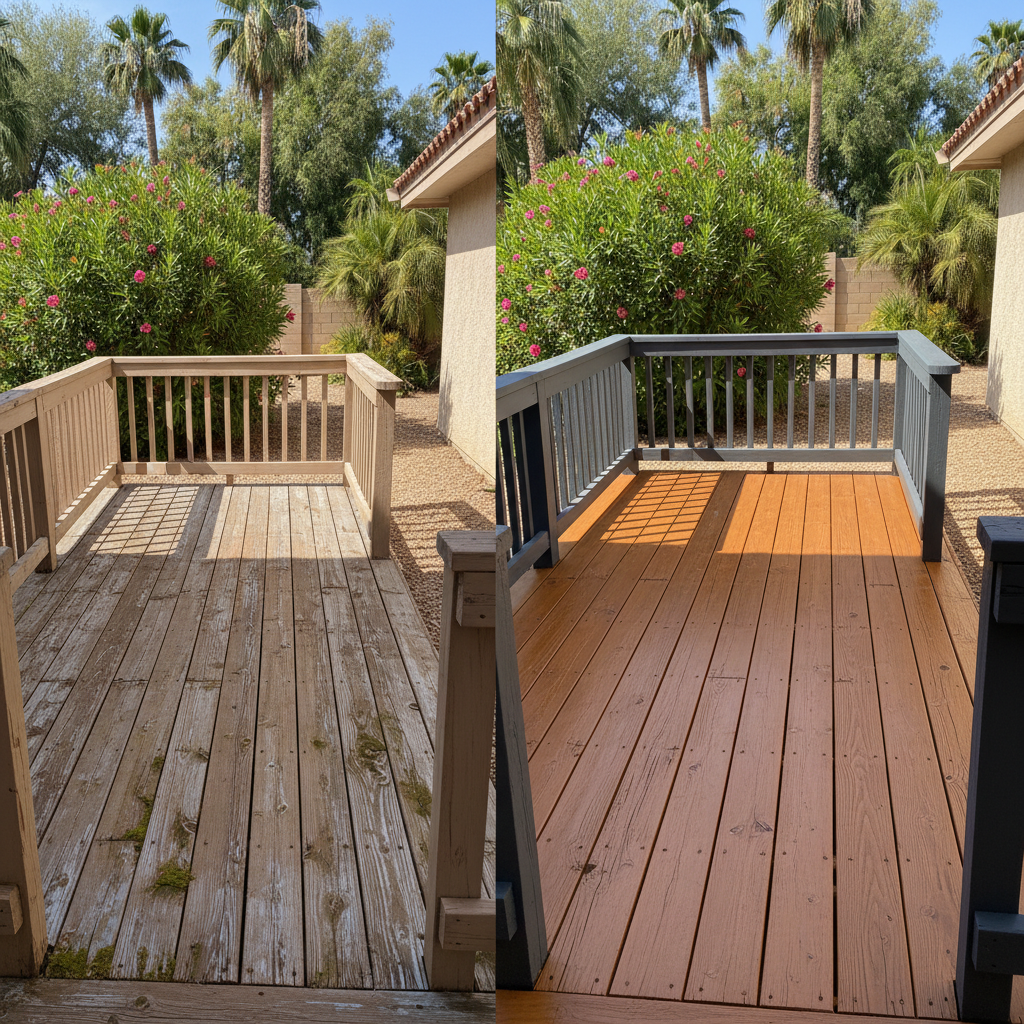
Painting vs. Staining Your Deck: A Phoenix Homeowner's Guide
So, you've got a wood deck, right? And it's looking a bit tired. Maybe the sun has bleached it out, or our monsoon rains left their mark. You know it needs some love, but then the big question pops up: should you paint it or stain it? I hear this one all the time from folks across Phoenix, from the historic homes in Coronado to the newer builds out in Queen Creek.
This isn't just about how it looks; it's about protecting your investment, especially with our super-intense Arizona sun. Let's dig into what I've seen work best, and what doesn't, right here in the Valley.
Deck Paint: The Full Coverage Option
When you paint a deck, you're basically putting a thick, opaque layer right over the wood. Think of it like house paint, but made tough enough for foot traffic.
Pros of Deck Paint:
- Maximum Protection: Paint forms a really thick barrier. It guards against UV rays, moisture, and even foot traffic. A true shield for your wood, you could say.
- Hides Imperfections: Got some ugly stains, mismatched wood, or small surface flaws? Paint covers them right up, giving you a smooth, uniform look.
- Color Variety: You can find paint in pretty much any color you can imagine. If you want your deck to match your trim or really stand out with a bold color, paint offers that flexibility.
Cons of Deck Paint:
- Hides Wood Grain: This is the big one for a lot of people. If you love the natural look of wood, paint will completely cover it.
- Peeling and Chipping: Over time, especially with our extreme temperature swings and direct sun, paint tends to crack, peel, and chip. When it fails, it can look pretty bad and becomes a real pain to prep for reapplication. You'll have to scrape and sand a lot more.
- Maintenance Can Be Tough: Once paint starts peeling, you can't just slap another coat on. You've got to remove the old, failing paint first, and that's a labor-intensive process.
Deck Stain: Enhancing the Natural Beauty
Stain, on the other hand, actually soaks into the wood fibers. It doesn't just sit on top like paint does. There are different types of stains, from transparent to solid, but they all work by penetrating the wood.
Pros of Deck Stain:
- Highlights Wood Grain: This is where stain really shines. It lets the natural beauty and texture of the wood show through, which is a huge plus for many homeowners.
- Easier Maintenance: When stain starts to fade, you can often clean the deck and apply another coat without all that extensive scraping. It wears down much more gracefully than paint.
- Better Penetration, Less Peeling: Because it soaks into the wood, stain is less likely to peel or chip than paint. It usually just fades or wears away gradually.
- Protection, But Different: It still protects against UV and moisture, just not with the same thick barrier as paint. Think of it more as conditioning the wood.
Cons of Deck Stain:
- Less Coverage for Imperfections: If your deck has a lot of blemishes, even a solid stain won't hide them as completely as paint would.
- Limited Color Options: While solid stains offer more color choices, you won't get the same vibrant, custom color palette you do with paint. It's more about enhancing wood tones.
- Needs Reapplication Sooner: Generally, stains might need reapplication a bit more frequently than a really well-applied paint job, especially in our harsh sun. But the reapplication process is usually much simpler.
What I Recommend for Phoenix Decks
Alright, so what's the final word for us here in Phoenix? Based on years of seeing what truly holds up and what doesn't, I almost always point folks toward stain, especially a high-quality semi-transparent or solid stain.
Here's why:
- Our Sun is a Destroyer: The intense UV radiation we get here is brutal on anything that sits on the surface. Paint, with its thick film, takes a direct hit. Over time, that constant expansion and contraction – from 115-degree summers to cooler winter nights – makes paint crack and peel like crazy.
- Ease of Maintenance: You really don't want to spend your precious weekends scraping paint in 100-degree heat, do you? Stain fades more evenly. When it's time to refresh, a good cleaning and a fresh coat are usually all you need. That's a huge time and labor saver.
- Looks Better Longer: A faded stain still looks pretty decent. Peeling paint? That looks terrible. You'll get more mileage out of a stained deck before it becomes an eyesore or a major project.
Now, if you have a pressure-treated pine deck that's seen better days, and you really want a uniform look, a solid color stain can give you the best of both worlds. It offers more opacity than a semi-transparent, covering some imperfections, but still penetrates the wood better than paint.
Ultimately, it comes down to what matters most to you. If you want to see that beautiful wood grain and prefer easier, less intensive maintenance, go with stain. If you absolutely need a specific color and don't mind the bigger prep work down the line, paint might be your choice. But for most Phoenix homeowners, especially those with wood decks exposed to the elements, stain is the champion for durability and long-term satisfaction. We at Done Right Decks of Phoenix have helped plenty of folks make this choice, and we're always happy to chat through your specific situation.